Reach Truck Forklift Guide: Uses, Specs & Cost (2026)
A reach truck extends forks into racking while the body stays in the aisle. Learn when you need one, aisle width needed, and rental and purchase prices.
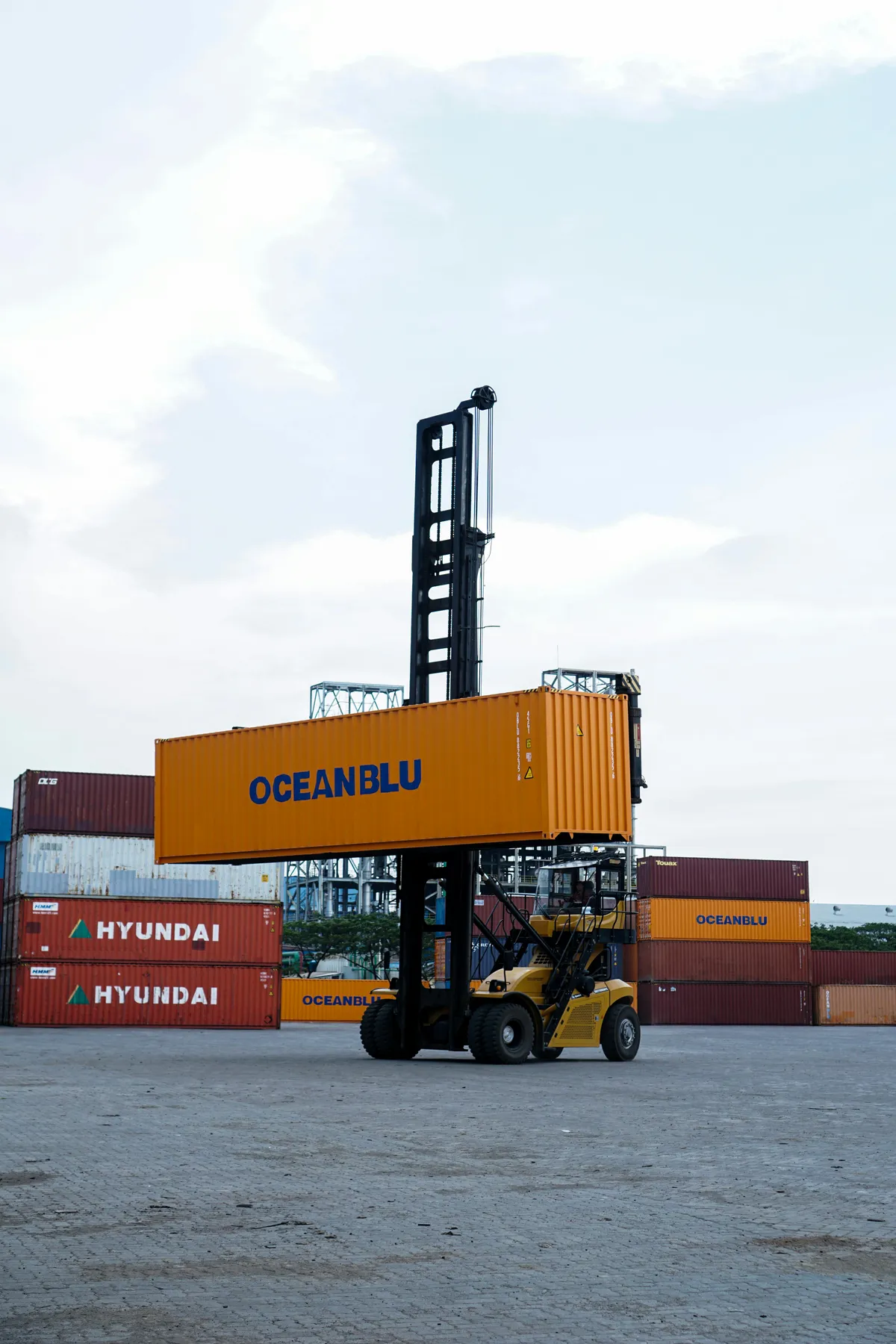
A reach truck is a Class II electric narrow-aisle lift truck designed to store and retrieve pallets in racking systems while operating in aisles as narrow as 8.5 feet. Unlike a counterbalanced forklift, which carries the load cantilevered in front of its wheelbase, a reach truck uses a pantograph or scissors mechanism to extend the forks and carriage forward into the rack, then retract them with the load positioned over the front axle for travel. This design enables high-density storage in rack bays up to 40 feet high, making reach trucks the dominant machine in modern US distribution centers, e-commerce fulfillment centers, and cold storage facilities.
Reach Truck vs. Counterbalance Forklift: Which Do You Need?
The core trade-off: a reach truck stores more per square foot indoors, but a counterbalanced forklift handles a wider range of environments and load types.
| Feature | Reach Truck (Class II) | Counterbalance (Class I / V) |
|---|---|---|
| Minimum aisle width | 8.5 to 10.5 ft | 11 to 13 ft |
| Max lift height | 30 to 45 ft | 15 to 25 ft typical |
| Environment | Indoor, smooth concrete only | Indoor or indoor + outdoor |
| Fuel type | Electric only | Electric, LPG, diesel |
| Capacity range | 2,500 to 5,500 lb | 2,000 to 36,000 lb |
| New purchase price | $35,000 to $65,000 | $28,000 to $65,000 |
Choose a reach truck when: your warehouse uses standard 40-inch-deep pallet racks, you need to store above 20 feet, and your aisles are under 11 feet wide.
Choose a counterbalanced forklift when: your operation includes outdoor work, loading docks with grade changes, mixed load types, or capacities above 5,500 lb.
Cold storage facilities in particular tend to favor reach trucks even beyond the aisle-width advantage. Because reach trucks run on electric power only, they produce no exhaust that needs ventilating inside a sealed freezer environment, unlike an LPG or diesel counterbalanced alternative. That’s one reason reach trucks show up so consistently in refrigerated distribution centers alongside standard dry-goods warehouses.
How a Reach Truck Works
The defining feature is the pantograph carriage: a scissor-linkage mechanism mounted on the mast that slides the fork carriage forward 24 to 30 inches without moving the truck body. The operator drives into the aisle, positions the truck parallel to the rack face, extends the forks into the rack bay, lowers the load onto the beams, and retracts the empty forks.
Because the load is carried directly over the front axle during travel, rather than cantilevered in front, a reach truck achieves better travel stability per square foot of floor space. This allows it to use lighter, shorter outrigger legs and operate in narrower aisles than any counterbalanced machine.
Reach Truck Specifications to Confirm Before Buying or Renting
- Load capacity at lift height: rated capacity drops significantly above 20 feet. Request the full capacity chart for your specific rack height configuration.
- Mast free lift: the height the carriage can rise before the mast section extends above the collapsed height. Essential in buildings with low overhead sprinklers, HVAC, or lighting.
- Aisle width requirement: depends on pallet size (GMA 40×48 vs. custom), the unit’s turning radius, and whether wire-guide or rail infrastructure is installed.
- Battery size and shift capacity: lead-acid batteries run 1 to 2 eight-hour shifts per charge. Lithium-ion enables opportunity charging between shifts without full swaps or battery room infrastructure.
Reach Truck Battery: Lithium-Ion vs. Lead-Acid
Since reach trucks run on electric power only, the battery is one of the biggest factors in both uptime and total cost. Lead-acid batteries cost $3,000 to $6,000 upfront and deliver 1,000 to 1,500 charge cycles, roughly five years of service, but they need watering every 10 or so cycles and a dedicated, ventilated charging room with an 8-hour cool-down between charges. Lithium-ion batteries cost more upfront, $7,000 to $15,000, but deliver 3,000 or more cycles, close to a decade of service, support opportunity charging in place between shifts, and need no watering or dedicated charging room, according to Flux Power’s battery comparison guide.
For a reach truck running two or three shifts a day in a distribution center, the opportunity-charging advantage alone often justifies the higher upfront cost, since there’s no need to swap batteries mid-shift or build out a charging room. See our lithium-ion vs. lead-acid guide for the full payback math on when the switch pays for itself.
Is a Reach Truck Still the Right Call, or Should You Automate?
Warehouse automation is moving into narrow-aisle work, but it hasn’t replaced the reach truck. Automated guided vehicles suit high-volume, fixed-route moves with heavy infrastructure investment, while autonomous mobile robots use LiDAR and AI-based navigation to work in existing aisles without floor modifications, deployable in four to ten weeks in a brownfield facility, according to Novus Hi-Tech’s comparison of AMRs, AGVs, and forklifts. Human-operated forklifts, including reach trucks, remain essential for high-bay racking, outdoor yards, and irregular or heavy loads: exactly the conditions most reach trucks are bought or rented for.
If your racking is standard-depth and your routes are fixed and repetitive, it’s worth evaluating automation alongside a reach truck purchase. If your operation handles varied pallet sizes, heights, and occasional irregular loads, a reach truck remains the practical, lower-cost choice.
Reach Truck Safety Features to Expect in 2026
Newer reach trucks increasingly ship with LiDAR-based pedestrian detection, automatic speed reduction in congested aisles, and active stability control. This safety technology is becoming standard across forklift fleets generally as manufacturers shift from reactive to predictive safety systems, per TCM’s 2026 forklift fleet trends report. If you’re renting rather than buying, ask what safety tech is built into the specific unit on offer, since older fleet units in a rental pool may not include it.
Reach Truck Operator Certification
Reach trucks are Class II equipment under OSHA’s forklift classification system, and operating one requires certification specific to that class under 29 CFR 1910.178. A certification card for a sit-down counterbalanced forklift does not cover a reach truck. The operator needs a separate hands-on evaluation on the reach truck itself before running one. Certification runs roughly $50 to $200 per operator and stays valid for three years. See our OSHA forklift certification guide before you put someone on a reach truck for the first time.
Reach Truck Costs
New purchase: $35,000 to $65,000 for standard-capacity units (2,500 to 4,500 lb, 30-foot lift). High-bay models (40 to 45 ft) reach $65,000 to $90,000.
Used (3 to 6 years, 6,000 to 10,000 hours): $14,000 to $28,000 with a pre-purchase inspection by a certified technician.
Rental rates:
| Duration | Rate Range |
|---|---|
| Daily | $180 to $320 |
| Weekly | $600 to $1,150 |
| Monthly | $1,500 to $3,000 |
Urban markets (LA, Chicago, Dallas) run 10 to 20% above these figures. For a full breakdown of rental rates across all forklift classes, see our forklift rental cost guide.
Availability is worth checking before you assume a reach truck will rent the same way a standard forklift does. Because dealers get more value renting specialized units on longer contracts, reach trucks more often carry a one-week rental minimum rather than a simple daily rate. If your project is genuinely a single day, confirm the minimum period before you plan around it. A standard counterbalanced electric or LPG unit is usually the easier same-day booking.
Renting vs. Buying a Reach Truck
At $1,200 to $3,000 a month, renting a reach truck makes sense for a genuinely short need: a peak season, a warehouse move, or testing a new racking layout before committing to a purchase. For ongoing use, the math flips fairly quickly. A new reach truck at $35,000 to $65,000 breaks even against renting in under three years at typical usage, in the same range as the 18 to 26 month break-even most standard counterbalanced forklifts show against renting. Run the specific fuel, delivery, and damage-waiver costs for your situation using our forklift rental cost guide. Those line items apply to a rented reach truck the same way they apply to any other rented forklift.
Is a Reach Truck Right for Your Operation?
A reach truck pays for itself in storage density: it adds 30 to 50% more pallet positions in the same footprint versus a counterbalanced machine by enabling narrower aisles and higher rack bays. If your ceiling is under 18 feet or you need to move loads outdoors, it is the wrong tool. If your operation is a dry-goods distribution center, e-commerce fulfillment hub, or cold-storage facility with pallet racking above 20 feet and aisles under 11 feet, it is almost certainly the right choice.
Use the forklift selector to confirm which Class fits your lift height and aisle width, or compare acquisition costs in our buy vs. rent vs. lease guide.
Sources
- Flux Power. “How to Choose the Right Forklift Battery.” https://www.fluxpower.com/how-to-choose-the-right-forklift-battery
- Novus Hi-Tech. “AMR vs. AGV vs. Forklift: Best Material Handling Choice in 2026.” https://novushitech.com/amr-vs-agv-vs-forklift/
- TCM. “2026 Forklift Fleet Trends: Electrification, Safety & Telematics in Focus.” https://www.tcm.eu/blog/2026-forklift-fleet-trends-electrification-safety-telematics-in-focus
- OSHA. “Powered Industrial Trucks (Forklifts).” https://www.osha.gov/powered-industrial-trucks
- US Forklift Certification. “Forklift Certification Cost: What You’ll Pay in 2025.” https://usforkliftcertification.com/forklift-certification-cost-what-youll-pay-in-2025/
Frequently Asked Questions
What is a reach truck forklift?
A reach truck is a Class II electric narrow-aisle lift truck that extends its forks and carriage forward, reaching into racking, while the machine body stays in the aisle. This pantograph or scissors-mast design allows it to work in aisles as narrow as 8.5 feet and lift to heights of 30-45 feet, making it the standard machine for high-density pallet racking in distribution centers and 3PL warehouses.
What aisle width does a reach truck need?
A standard reach truck operates in aisles 8.5 to 10.5 feet wide depending on load size and unit model. Compare this to a counterbalanced forklift, which typically needs 11-13 feet of aisle. Very-narrow-aisle (VNA) reach trucks with wire-guided or rail systems can work in aisles as narrow as 6-8 feet.
How high can a reach truck lift?
Most production reach trucks lift to 30-40 feet. Specialty high-bay models reach 45 feet or more. Rated capacity decreases with height: always confirm the nameplate load capacity at your specific lift height, not just the base rating.
Can a reach truck be used outdoors?
No. Reach trucks are Class II electric machines designed for smooth, hard, level indoor floors. They use hard cushion tires that provide no traction on outdoor surfaces, and their stability calculations assume level concrete. Even dock ramps with significant grade can exceed the stability limits of a reach truck.
How much does a reach truck cost to rent?
Reach truck rental rates range from $180 to $320 per day, $600 to $1,150 per week, and $1,500 to $3,000 per month in the US market. Rates vary by lift height spec and local availability. High-bay models (35+ feet) run toward the top of those ranges.
Do you need special certification to operate a reach truck?
Yes. Reach trucks are Class II equipment under OSHA's forklift classification, and 29 CFR 1910.178 requires operator certification specific to that class. A certification card for a sit-down counterbalanced forklift does not cover a reach truck. The operator needs a separate hands-on evaluation on the reach truck itself before operating one.