Lithium-Ion vs. Lead-Acid Forklift Batteries (2026)
Compare lithium-ion and lead-acid forklift batteries on cost, charging time, maintenance, lifespan, and total cost of ownership for your operation.
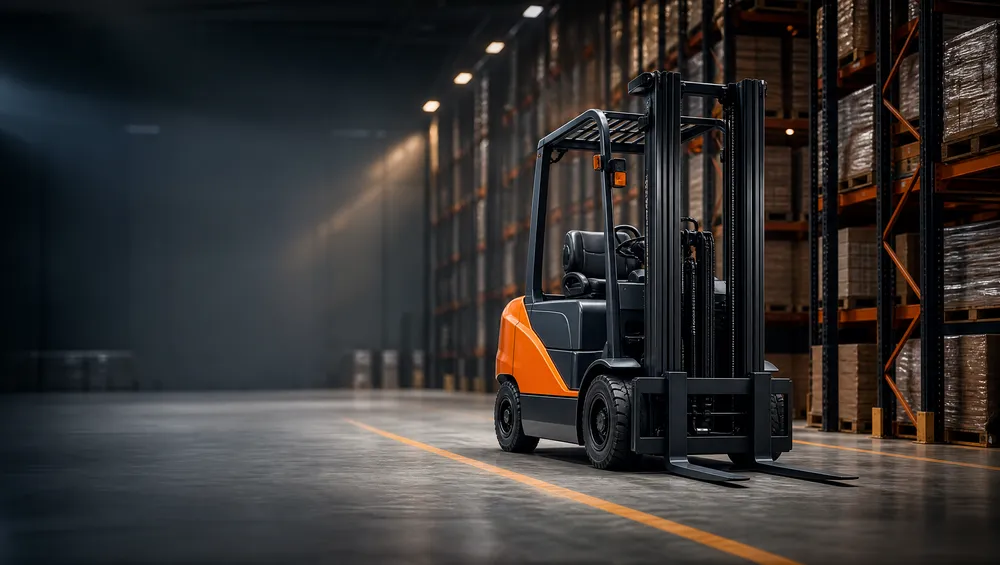
Electric forklifts are outselling internal combustion models at an accelerating rate, driven largely by the shift from lead-acid to lithium-ion batteries. But lithium costs more upfront, and the right choice depends heavily on how many shifts your trucks run, who handles battery maintenance, and how long you plan to keep the equipment. This guide puts both chemistries head-to-head on every major factor so you can make the decision with confidence.
Side-by-Side Comparison
| Factor | Lead-Acid | Lithium-Ion |
|---|---|---|
| Upfront battery cost | $7,500 to $9,000 | $8,000 to $12,000+ |
| Charge time (full) | 8 to 16 hours | 1 to 2 hours (opportunity or fast-charge) |
| Cooling-down period required | Yes, 8 hours | No |
| Opportunity charging | No (damages cells) | Yes, partial charges are fine |
| Maintenance requirement | Weekly watering, equalization | Maintenance-free |
| Cycle life | 1,200 to 1,500 cycles | 2,000 to 3,000+ cycles |
| Typical lifespan | 5 years (single-shift) | 8 to 10 years |
| Multi-shift battery swap needed | Yes (1 battery per shift) | No |
| Weight | Higher | 30 to 40% lighter per equivalent capacity |
| Cold storage performance | Degrades significantly | Minimal degradation |
| TCO breakeven vs. lead-acid | n/a | 3 to 5 years (multi-shift) |
Upfront Cost: Lead-Acid Is Still Cheaper to Buy
A lead-acid battery pack for a standard Class I or Class III forklift runs $7,500 to $9,000 and requires a compatible charger ($800 to $2,500). Lithium-ion packs for the same truck run $8,000 to $12,000, with integrated battery management systems (BMS) adding to the cost. For a single-shift operation with a modest fleet, that $3,000 to $5,000 gap per truck is material.
However, multi-shift operations must also purchase additional lead-acid battery banks: typically one per extra shift, plus a battery room with ventilation, deionized water, and acid-handling equipment. A three-shift operation may need two to three battery banks per truck, tripling the battery capital cost. Lithium eliminates the need for extras entirely.
Charging: Lithium Changes the Math Entirely
Lead-acid requires a complete charge cycle of 8 to 16 hours, followed by a mandatory 8-hour cool-down before the battery can be used again at peak efficiency. This means a single lead-acid battery supports only one shift per day. For two or three shifts, you need spare batteries and a battery swap area, plus the labor to swap 800 to 1,400 lb battery packs safely.
Lithium-ion accepts opportunity charging: plug in during a 15- or 30-minute break and recover 15 to 30% of capacity. There is no cool-down requirement and no memory effect. A single lithium battery can typically power a forklift through two to three full shifts per day, eliminating the swap infrastructure entirely.
For single-shift operations running 8 hours per day, this advantage largely disappears: the lead-acid battery has overnight to charge and cool.
Maintenance: A Hidden Cost in Lead-Acid Operations
Lead-acid batteries require active maintenance:
- Watering: Cells must be checked and topped with deionized water every 1 to 2 weeks. Failure to water causes irreversible sulfation and shortens battery life sharply.
- Equalization charges: Monthly or quarterly high-voltage cycles are required to prevent cell imbalance.
- Terminal cleaning: Acid corrosion on terminals must be cleaned regularly.
- PPE and safety: Handling battery acid requires gloves, goggles, and eyewash stations, and OSHA training for battery room personnel.
Industry estimates put lead-acid maintenance labor at $200 to $600 per battery per year once watering time, equalization, and handling are accounted for. A fleet of 20 forklifts adds $4,000 to $12,000 per year in battery maintenance labor alone.
Lithium-ion is completely maintenance-free. The integrated BMS manages cell balancing automatically, there is no fluid to check, and no acid handling is required. This simplifies operations, reduces labor costs, and lowers safety risk.
Lifespan and Total Cost of Ownership
Over a 10-year horizon, the math often favors lithium, especially in multi-shift environments.
- Lead-acid: 1,200 to 1,500 cycles at ~250 cycles per year = 5-year replacement cycle. A fleet of 10 trucks replaces 10 batteries at $8,000 each ($80,000) roughly twice over 10 years.
- Lithium-ion: 2,000 to 3,000 cycles at ~750 cycles per year in a three-shift operation = 3 to 4 year replacement cycle. At 250 cycles (single shift), the battery may last 10 years without replacement.
TCO breakeven: the point at which the lower ongoing costs of lithium offset its higher upfront price, typically occurs at 3 to 5 years for multi-shift operations and longer for single-shift. If you are buying a truck you plan to keep for 7 to 10 years and running it two or more shifts per day, lithium-ion nearly always wins on total cost.
When Lead-Acid Still Makes Sense
Lead-acid is not obsolete. It remains the better choice when:
- Single-shift operation with overnight charging: the convenience advantage of lithium is minimal.
- Budget is constrained and the additional upfront cost cannot be justified without a long payback period.
- Short equipment horizon: if you plan to sell or replace the truck in 3 years, lead-acid’s lower initial cost may not be offset by lithium savings in time.
- Existing battery rooms: if the infrastructure is already in place and staffed, the transition cost to lithium must also be factored in.
When Lithium-Ion Is the Clear Choice
- Two or three shifts per day: the ability to opportunity-charge eliminates battery swaps and extra inventory.
- Cold storage facilities: lithium handles low temperatures far better than lead-acid, which loses capacity rapidly below 40°F.
- Limited maintenance staff: removing the watering and equalization burden is operationally significant in lean teams.
- New facility or new fleet: building the charging infrastructure for lithium from scratch costs less than installing a battery room for lead-acid.
For more context on choosing between electric and LPG power overall, see our electric vs. LPG comparison. To find electric forklifts matched to your specific load and aisle requirements, use our forklift selector.
Frequently Asked Questions
How much does a forklift battery cost?
A lead-acid forklift battery typically costs $7,500 to $9,000 for a standard Class I or Class III application. Lithium-ion batteries for the same truck run $8,000 to $12,000 or more depending on capacity and brand. Lithium-ion costs are falling roughly 10 to 15% per year as the technology matures.
How long does a forklift battery last?
Lead-acid batteries typically deliver 1,200 to 1,500 full charge cycles, roughly 5 years in a single-shift operation. Lithium-ion batteries are rated for 2,000 to 3,000+ cycles, often lasting 8 to 10 years. Improper charging, overheating, or underwatering a lead-acid battery significantly shortens its lifespan.
Can I charge a lithium forklift battery during a break?
Yes, opportunity charging during breaks is one of lithium-ion's core advantages. Unlike lead-acid, lithium accepts partial charges without damaging the cells. A 30-minute break charge can add 20 to 30% capacity, allowing a single battery to carry a truck through two or three shifts without a battery swap.
Do lithium forklift batteries require maintenance?
Lithium-ion forklift batteries are essentially maintenance-free. They require no watering, no equalization charges, and no acid handling. Lead-acid batteries require weekly or bi-weekly watering, monthly equalization charges, and regular terminal cleaning, with associated labor and safety equipment costs.
When does lithium-ion become cheaper than lead-acid on a total cost basis?
Most analyses place the TCO breakeven point at 3 to 5 years for multi-shift operations. The key drivers are how many shifts the truck runs per day (more shifts = bigger lithium advantage), the cost of labor for battery maintenance, and whether lead-acid requires multiple battery banks for shift changes.