What You Need to Rent a Forklift: Requirements Checklist
What dealers require to rent a forklift: ID, deposit, insurance, and a certified operator. Full checklist so your rental isn't held up at pickup.
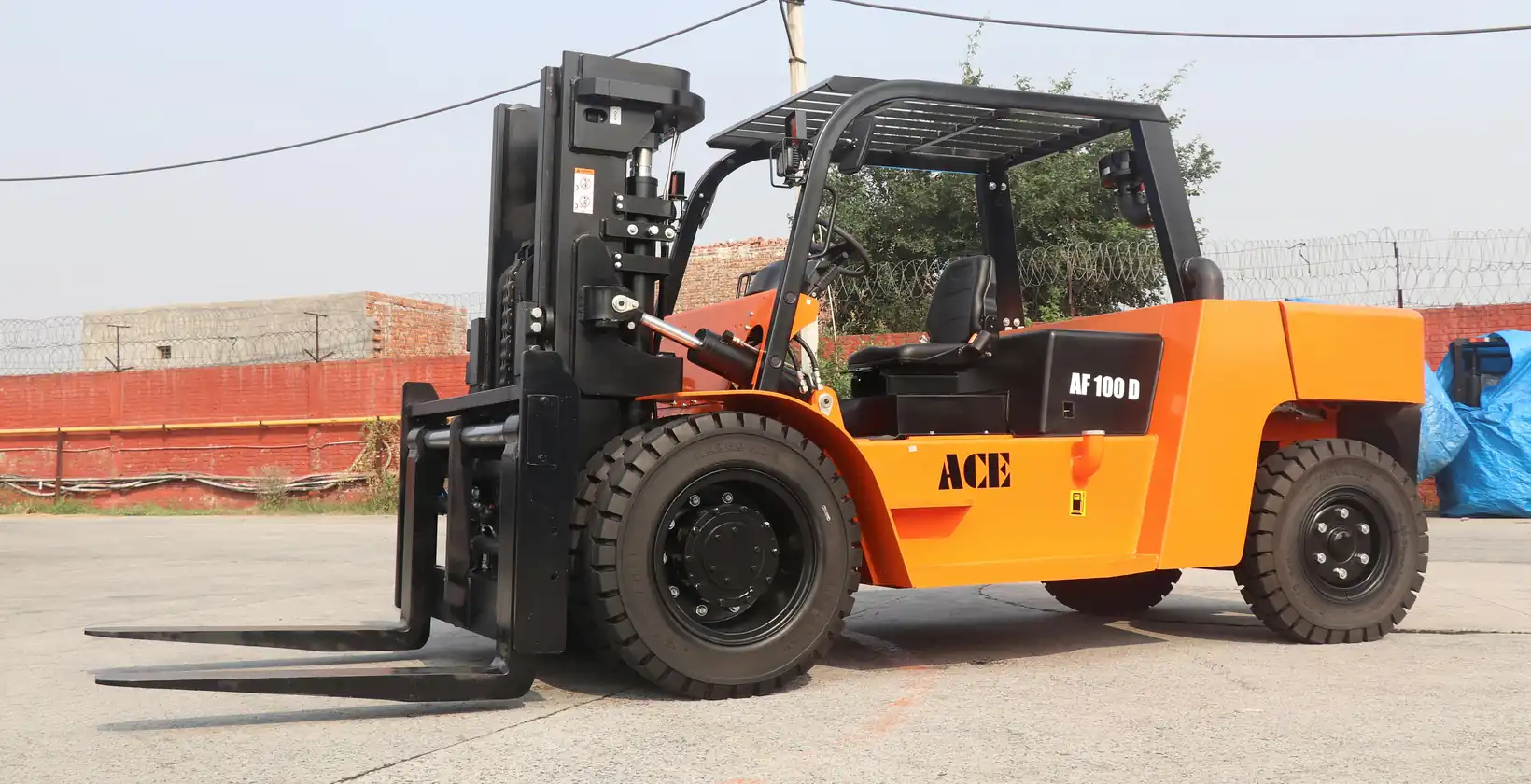
Nothing stalls a rental like showing up to collect a forklift and being turned away for a missing certificate of insurance. Dealers have a standard set of requirements, and most are easy to meet if you know them in advance. Here’s exactly what you need to rent a forklift, and the one requirement that’s a legal obligation, not just a dealer preference.
The Four Things Every Dealer Requires
| Requirement | What it means | Typical detail |
|---|---|---|
| Identification | Valid ID and a business name for commercial rentals | Driver’s license. Business account for net terms |
| Deposit | Security against damage or non-return | $500 to $2,000 hold, or first period up front |
| Insurance | Liability (and often physical damage) coverage | Often $1M general liability. Dealer named additional insured |
| Certified operator | OSHA certification to legally use the unit | Required in any workplace |
Meet these four and the paperwork moves fast. Miss one, usually the certificate of insurance, and pickup gets delayed.
The One That’s the Law: Operator Certification
You don’t need a special license to rent a forklift. But the moment it’s operated in a workplace, OSHA 29 CFR 1910.178 requires the operator to be trained and certified for that specific class of powered industrial truck. Certification is the employer’s legal responsibility, it’s class-specific (a sit-down certification doesn’t cover a reach truck), and it must be refreshed at least every three years.
Renting the equipment is easy. Putting an uncertified operator on it exposes you to OSHA citations and liability if something goes wrong. If your team isn’t certified, see our OSHA forklift certification guide before the unit arrives.
How Much Does Certification Cost, and How Long Does It Take?
Budget $50 to $200 per operator. Online coursework alone runs as little as $58, and full in-person training with hands-on evaluation runs $150 to $500, according to US Forklift Certification’s 2026 pricing breakdown. Either way, the certification stays valid for three years before it needs renewing, though a refresher can be required sooner after an accident, a near-miss, or unsafe operation observed on the floor.
One thing catches people off guard: online-only training does not satisfy OSHA by itself. The formal instruction portion can happen online, but a qualified person still has to run a hands-on evaluation on the actual equipment before the operator is legally cleared to use it. Skipping that step is one of the most common compliance gaps dealers see at pickup.
What OSHA Certification Actually Requires
OSHA 29 CFR 1910.178 breaks certification into three parts, and all three have to happen before an operator touches the controls: formal instruction (classroom or online), hands-on practical training on the specific equipment, and a performance evaluation by a qualified person. Skipping straight from an online quiz to the forklift skips the part OSHA actually inspects for.
Certification is also employer-specific, not a portable license. If an operator changes jobs, the new employer has to evaluate them on its own equipment and site conditions, even if the original training was valid and current. That matters for rentals: an operator certified at one company doesn’t carry that certification over to a rental at a different business without a fresh site-specific evaluation. Documentation should include the operator’s name, the training and evaluation dates, and who conducted the training, kept on file for the length of employment plus three years.
Business Account vs. One-Time Rental: What Changes
A first-time, one-day rental and an ongoing business account are not evaluated the same way at the counter. A one-time renter typically pays the full deposit or first-period rate up front and provides a certificate of insurance for that single job. A business with a standing account can often skip the per-rental deposit entirely once it has approved credit on file, and insurance is usually confirmed once per policy period rather than re-verified on every pickup.
The certification requirement doesn’t loosen either way. Whether it’s a one-day job for a homeowner moving equipment or a 12-month fleet contract for a warehouse, whoever operates the unit in a workplace setting still needs current, class-specific OSHA certification. Dealers are generally more flexible on paperwork speed for repeat business accounts, not on the safety requirement itself.
Do Requirements Differ by State? California and Other State Plans
Federal OSHA sets the baseline, but 22 states run their own OSHA-approved state plans that can exceed those minimums. California is the one that trips up out-of-state renters most often: Cal/OSHA enforces stricter rules than federal OSHA, including an explicit seatbelt-use mandate and more detailed recordkeeping on operator names, trainer qualifications, and exact training dates.
Certification generally transfers across state lines if the original training met OSHA standards, but the new employer still has to run a site-specific evaluation, and moving from a federal-OSHA state into a state-plan state like California can mean extra steps.
| State type | Examples | What it means for renters |
|---|---|---|
| OSHA state-plan states | California, Washington, Oregon, Michigan, Minnesota | Can enforce rules stricter than federal OSHA. Confirm local requirements before booking |
| Federal OSHA states (no separate plan) | Texas, Florida, Pennsylvania, Ohio, Georgia, Colorado | Federal 29 CFR 1910.178 applies directly, no extra state layer |
If you’re renting in a state-plan state, confirm with the dealer whether your operator’s existing certification covers that state’s specific requirements before you book, not after the forklift arrives.
Insurance: What Dealers Actually Want
For business rentals, most dealers require a certificate of insurance (COI) showing:
- General liability, commonly $1 million per occurrence
- Physical damage / equipment coverage, protects the rented unit itself
- The dealer named as additional insured, request this from your insurer. It can take a day, so don’t leave it to pickup morning
No commercial policy? Most dealers offer a damage waiver (10 to 15% of the base rate) that covers accidental damage to the unit during the rental. It is not liability coverage. It won’t protect you if the forklift damages property or injures someone, but it removes the exposure to a $3,000 to $8,000 mast or tire repair bill at return.
Business renters should also confirm workers’ compensation coverage for whoever operates the unit. It’s a separate policy from general liability and the equipment damage waiver, and most dealers will ask about it for any commercial job even though it doesn’t usually appear on the certificate of insurance itself. A quick call to your insurance broker before pickup day, rather than after, is the cheapest way to confirm all three coverages line up with what the dealer expects to see.
What Happens If You Skip a Requirement
Renting without meeting these requirements doesn’t just risk a delayed pickup. Operating a forklift with an uncertified operator is an OSHA violation. Under current OSHA penalty guidance, a serious violation can run up to $16,550, and willful or repeated violations can reach $165,514. Powered industrial trucks have consistently ranked among OSHA’s most frequently cited categories, so this isn’t a theoretical risk. It’s one of the areas inspectors actively check.
Beyond the fine, an uncertified operator involved in an incident typically voids any damage waiver you took out, which puts the full repair or liability cost back on you. None of the four requirements above exist to slow you down. They exist because the gaps they cover are exactly where rentals go wrong.
Get matched to verified local dealers and request quotes, free, 60 seconds, no signup.
Find rental dealers near you →Pre-Pickup Checklist
Have these ready before you go, or before the unit is delivered:
- Valid photo ID (and business details for a commercial account)
- Payment method for the deposit or first-period charge
- Certificate of insurance with the dealer named additional insured (business rentals)
- Proof of operator certification for the correct truck class
- Confirmed delivery window and fuel responsibility
- The damage-waiver decision made (recommended if you lack physical-damage coverage)
- Site ready: clear path, level ground, and known load weights
After You Qualify
Meeting the requirements is step one. Getting a fair price is step two. Once you’re ready to rent, check what’s reasonable with our rental rates guide and rental cost guide, then read the rental agreement guide so the contract holds no surprises. If you only need the unit for a single day, our day-rental cost guide covers what changes on a short job. When you’re set, the forklift selector matches you with verified local dealers.
Sources
- OSHA. “Powered Industrial Trucks (Forklifts).” https://www.osha.gov/powered-industrial-trucks
- CertifyMe.net. “OSHA Forklift Certification Requirements.” https://www.certifyme.net/forklift-certification-requirements/
- US Forklift Certification. “Forklift Certification Cost: What You’ll Pay in 2025.” https://usforkliftcertification.com/forklift-certification-cost-what-youll-pay-in-2025/
- Industrial Forklift Truck. “Forklift Certification Requirements by State.” https://ca.industrialforklifttruck.org/2025/09/23/forklift-certification-requirements-by-state/
- ForkliftComply. “Forklift Certification Requirements: Cal/OSHA vs. Federal OSHA.” https://www.forkliftcomply.com/post/forklift-certification-requirements-cal-osha-vs-federal-osha
Frequently Asked Questions
Do you need a license to rent a forklift?
You don't need a special driver's license to rent a forklift, but whoever operates it must be OSHA-certified for that class of powered industrial truck under 29 CFR 1910.178. Dealers rent the equipment to anyone who meets ID, deposit, and insurance requirements, but the moment it's used in a workplace, OSHA operator certification is legally required and the employer is responsible for it.
Do you need insurance to rent a forklift?
Usually yes for business rentals. Dealers typically require proof of general liability insurance (often $1 million) and sometimes physical-damage coverage on the equipment, naming the dealer as additional insured. If you don't have a policy, most dealers offer a damage waiver (10-15% of the base rate) that covers accidental damage to the unit, though it's not a substitute for liability coverage.
How much deposit do you need to rent a forklift?
Deposits vary by dealer and rental length. Short-term rentals often require a credit-card hold of $500-$2,000 or the first period's rate up front. Long-term contracts may waive the deposit for established business accounts with approved credit. Independent dealers tend to be more flexible than national chains on deposits for repeat local customers.
Can anyone rent a forklift, including homeowners?
Most dealers will rent to individuals, not just businesses, provided you meet ID and deposit requirements. The catch is the operator certification: OSHA rules apply in workplaces, and even for personal use you're responsible for safe operation. Many dealers will ask whether the unit is for commercial use and may require proof of liability insurance for business rentals.
How much does forklift operator certification cost, and how long does it take?
Certification runs $50-$200 per operator: online coursework alone can cost as little as $58, while in-person training with hands-on evaluation runs $150-$500. It's valid for three years. Online-only training does not satisfy OSHA on its own. A qualified person still has to evaluate the operator on the actual equipment before they can run it.
Does California have different forklift rental requirements?
California enforces its own rules through Cal/OSHA, which are stricter than federal OSHA in places, including an explicit seatbelt-use mandate and more detailed recordkeeping. California is one of 22 states with an OSHA-approved state plan. If your operator was certified in a federal-OSHA state and moves to California, expect to redo a site-specific evaluation even if the original training was valid.