OSHA Forklift Certification: Requirements & Training (2026)
What employers and operators need to know about OSHA forklift certification: training, recertification schedule, costs, and non-compliance penalties.
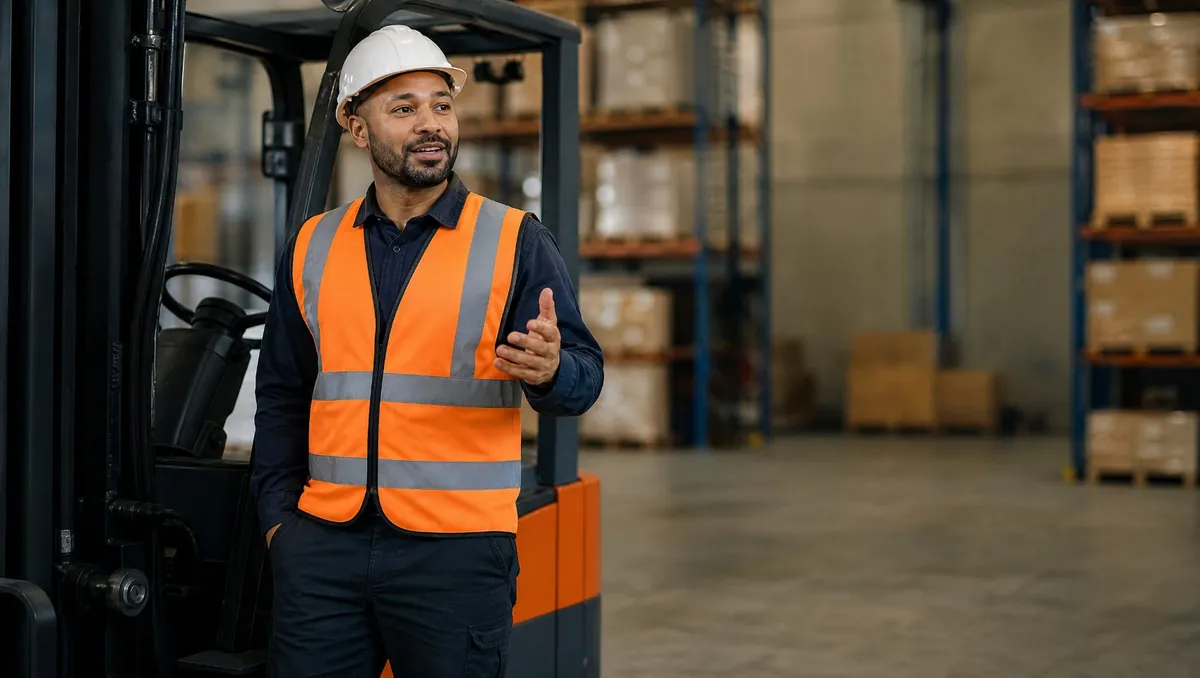
OSHA’s Powered Industrial Trucks standard, 29 CFR 1910.178: requires every forklift operator in the US to be trained and certified before operating a powered industrial truck. Employers carry full legal responsibility for certification. There is no federal license or government-issued card. Understanding what the standard actually requires, what it costs, and what happens when it is ignored can save your operation from serious injury and six-figure fines.
What OSHA Standard Covers Forklift Training?
29 CFR 1910.178(l) is the governing regulation. It applies to general industry (warehousing, manufacturing, distribution) and sets minimum requirements for operator training, evaluation, and recertification. The standard does not dictate specific curricula or course hours. It defines outcomes: the operator must demonstrate safe operation of the specific type of truck in the specific workplace.
A companion standard, 29 CFR 1926.602, covers forklifts in construction environments.
Who Is Required to Be Certified?
| Requirement | Detail |
|---|---|
| Minimum age | 18 years old (FLSA. Some states are stricter) |
| Who must be trained | Any employee who operates a powered industrial truck |
| Who is responsible | The employer, not the operator, not the staffing agency |
| Trainer qualifications | Must have knowledge, training, and experience with the specific truck type |
| Documentation | Written record of training, evaluation date, trainer name |
| Timing | Before the operator runs a forklift unsupervised |
Staffing agencies and host employers share responsibility under OSHA’s multi-employer doctrine: the host employer must ensure temp workers are certified for the trucks they will operate on-site.
The Three Parts of OSHA-Compliant Forklift Training
OSHA mandates a three-component program. Skipping any component means the operator is not legally certified.
Part 1: Formal Instruction
Formal instruction covers the written or lecture-based knowledge base: truck operating instructions, load handling, fueling/charging, pre-shift inspection, and workplace-specific hazards. This is the component most online providers cover. Topics must include:
- Operating characteristics of the specific truck type
- Similarities and differences from other trucks the operator may have used
- Visibility limitations and load manipulation
- Refueling, battery charging, and fluid checks
- Surface conditions and ramp/dock safety
Part 2: Hands-On Practice
The operator must physically operate the truck type under the supervision of a qualified trainer. This portion cannot be completed online. Practice should cover loading/unloading, stacking, travel on ramps, dock operations, and any site-specific maneuvers.
Part 3: Workplace Evaluation
A qualified evaluator observes the operator running the actual truck on the actual site. The evaluation confirms the operator can perform all required tasks safely in their real working environment. Only after a satisfactory evaluation is the operator considered OSHA-certified.
Recertification Requirements
OSHA requires recertification at least every three years and also when:
- The operator is observed operating unsafely
- An accident or near-miss occurs
- The evaluation reveals the operator is not operating safely
- The operator is assigned to a different type of truck
- Workplace conditions change in a way that affects safe operation
Recertification must follow the same three-part structure but can be abbreviated if evaluation shows the operator’s prior competency remains intact.
Typical Certification Costs
Training costs vary widely based on format and provider:
- Online-only courses (formal instruction only): $50 to $200 per operator. These supply documentation for Part 1 but do not satisfy the hands-on requirements.
- Third-party on-site training (all three parts): $150 to $400 per operator, depending on group size and travel costs.
- Employer-conducted in-house training: Near zero direct cost if a qualified internal trainer is available. The main cost is trainer time.
- Train-the-trainer programs: $300 to $800. Allow employers to certify an in-house trainer who then trains the full workforce indefinitely.
For most operations with more than five operators, investing in a qualified in-house trainer and a structured program provides the lowest per-operator cost and the most control over scheduling.
Penalties for Non-Compliance
OSHA treats uncertified forklift operators as a serious violation of 29 CFR 1910.178(l). Current civil penalty ranges (adjusted annually for inflation):
- Serious violation: up to $16,550 per violation
- Willful or repeated violation: up to $165,514 per violation
- Failure to abate: $16,550 per day beyond the abatement date
Beyond civil penalties, a workplace fatality involving an uncertified operator exposes the employer to criminal referrals and workers’ compensation liability that can dwarf OSHA fines.
How to Stay Compliant
- Audit your current operator roster, confirm every active operator has documented certification for each truck type they operate.
- Build a recertification calendar so no operator’s three-year window lapses unnoticed.
- Track truck-type changes: reassignment to a new class triggers immediate recertification before unsupervised operation.
- Keep written records, OSHA requires documentation of the training date, the trainer’s name, and the truck types covered.
Use our how-to-choose guide to identify the specific class of forklift your operation needs, then use our selector to find equipment options. Matching the right truck to the job reduces the number of different classes your operators must be certified on, simplifying your compliance program.
Frequently Asked Questions
Is a forklift license the same as OSHA certification?
There is no government-issued forklift license in the US. OSHA requires employers to certify their operators after completing training and evaluation, but there is no wallet card issued by a federal agency. Third-party online courses provide documentation that supports the employer's internal certification process.
How often does forklift certification need to be renewed?
OSHA requires recertification at least every three years, or sooner if an operator is observed operating unsafely, is involved in an accident or near-miss, receives an evaluation that shows they are not operating safely, or is assigned to a different class of truck.
Can an employer do forklift training in-house?
Yes. Employers are not required to use a third-party provider. They can conduct all three parts of training, formal instruction, hands-on practice, and workplace evaluation, internally, as long as the trainer is qualified (knowledgeable about the trucks and OSHA rules) and the certification is documented.
What are the OSHA penalties for uncertified forklift operators?
OSHA can cite employers under 29 CFR 1910.178(l) with serious violations up to $16,550 per violation and willful or repeated violations up to $165,514 per violation (2024 limits, adjusted annually for inflation). Fatalities or serious injuries raise the exposure considerably and may trigger criminal referrals.
Does online forklift certification satisfy OSHA requirements?
Online training satisfies only the formal instruction component of OSHA's three-part requirement. Hands-on practice and a workplace-specific evaluation must still be completed in person before an operator is considered fully certified. Online-only certificates do not meet OSHA standards on their own.