Forklift Pre-Shift Safety Checklist (OSHA, 2026)
OSHA requires a daily forklift inspection before every shift. Here's the pre-shift checklist, what to do when defects turn up, and how to document them.
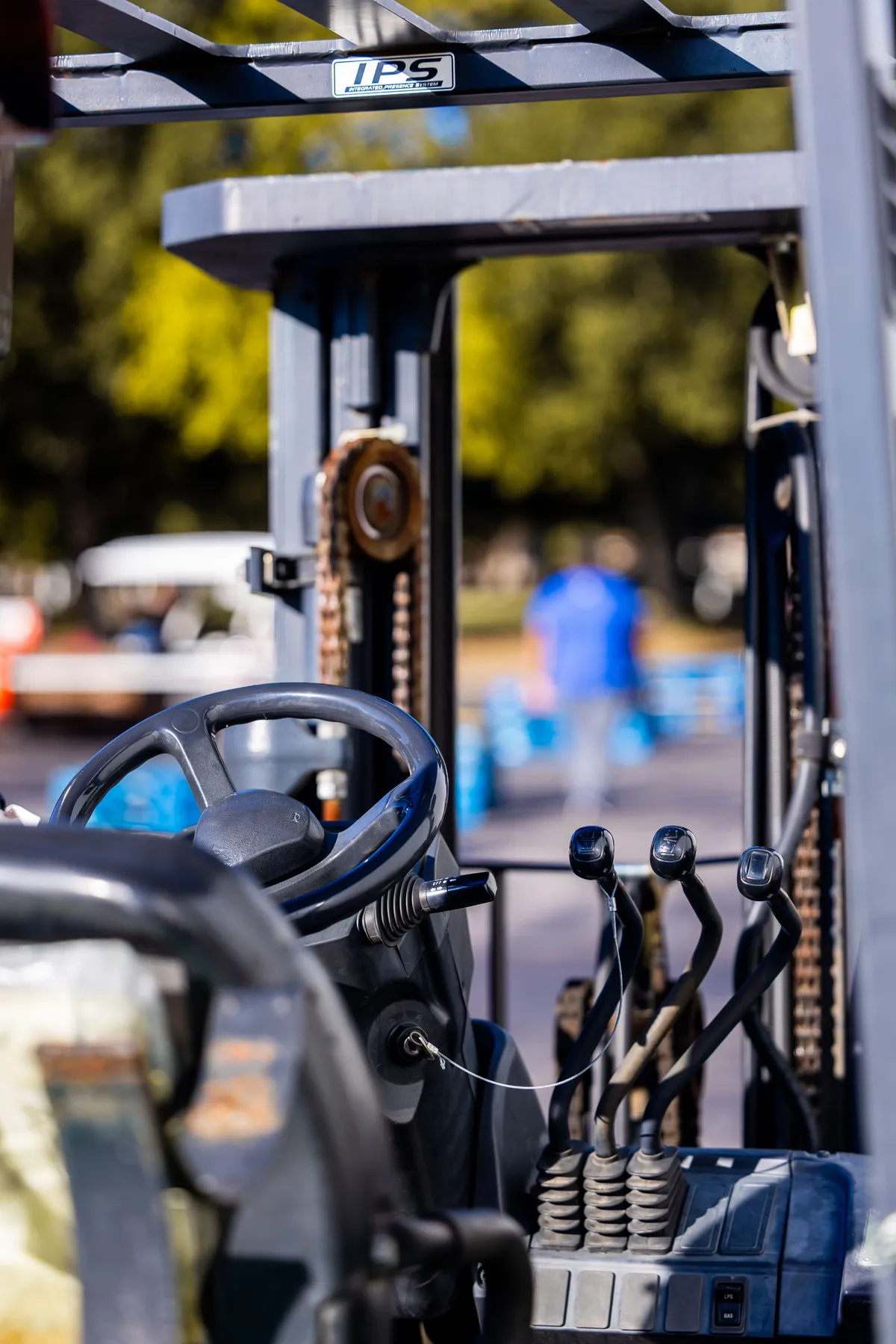
OSHA 29 CFR 1910.178(q)(1) requires that every powered industrial truck be inspected before each shift. This is not optional, OSHA lists forklift inspection violations among the top five most-cited general industry violations each year. A forklift with a known defect that injures an operator or third party can result in willful violation citations carrying fines up to $156,259 per incident under the 2024 OSHA penalty schedule, plus potential criminal liability for supervisors who knowingly allowed operation of an unsafe truck.
This guide provides a complete pre-shift inspection checklist, explains what to do when defects are found, and covers documentation requirements.
Complete OSHA Forklift Pre-Shift Inspection Checklist
Before Mounting the Forklift
Forks and carriage:
- No visible cracks or welds at fork heel or blade
- Fork tips at approximately the same height (within ¼ inch of each other)
- Fork spread appropriate for the pallet size in use
- Fork blade thickness above 90% of original (use a fork wear gauge, replace at or below 10% wear)
- Carriage rollers, backrest, and finger guards intact
Mast and hydraulics:
- No visible hydraulic oil leaks at lift cylinders, hoses, or manifold fittings
- Mast lift chains have equal tension and show no broken links or kinks
- Tilt cylinders intact and showing no leaks
- Mast moves smoothly through full range of tilt with no binding
Tires:
- Cushion tires: no chunks missing, no separation from rim, no excessive flat spots
- Pneumatic tires: no cuts, sidewall cracking, or embedded objects. Check inflation against placard PSI
- No loose wheel lug nuts or visible rim damage
Frame and safety devices:
- Operator restraint (seatbelt or overhead guard strap) present and latches correctly
- Overhead guard intact, no cracks, no missing bolts, not bent
- Nameplate legible, capacity rating visible and matches load requirements
After Mounting, Before Moving
Controls:
- Forward and reverse direction control operates correctly and returns to neutral
- Accelerator pedal responds smoothly. Brake pedal engages fully
- Parking/emergency brake holds the truck on a level surface
- Horn sounds when activated
- Warning lights and backup alarm (if equipped) functional
Hydraulic operation:
- Lift, lower, tilt forward, tilt back, and side-shift controls all operate smoothly
- No unusual sounds (grinding, squealing) during hydraulic operation
- Hydraulic fluid level within the marked range on the sight glass or dipstick
Power system, Electric:
- Battery charge indicator shows adequate charge for the shift
- Lead-acid battery: water level correct (plates covered). No corrosion or damage at terminals
- Lithium-ion battery: no visible case damage. Management system indicator shows no fault codes
- Battery connector fully seated and cable not pinched or frayed
Power system, LPG/Propane:
- Cylinder properly seated in the bracket and securing chain is latched
- No hose damage, soft spots, or smell of gas at fittings
- Gauge shows adequate fuel for the shift
- Fuel shutoff valve accessible and operational
Power system, Diesel:
- Fuel level adequate for the shift
- No visible fuel leaks under the machine
- Engine oil level within operating range on dipstick
What To Do When a Defect Is Found
OSHA’s standard is unambiguous: A forklift with a condition adversely affecting safety must not be placed in service. The operator’s required steps:
- Stop immediately: do not complete the shift on a defective machine under any circumstances.
- Tag the truck out of service: attach a physical lockout/out-of-service tag to the controls. Remove the key if possible.
- Notify a supervisor in writing: verbal notification alone is not sufficient for documentation.
- Record the defect on the inspection form: document exactly what was found, when, and what action was taken.
- Do not remove the out-of-service tag yourself: only an authorized maintenance technician or qualified supervisor may clear the truck for return to service after completing repairs.
Operators sometimes face pressure from supervisors to operate tagged equipment in order to meet production targets. OSHA’s General Duty Clause and Section 11(c) anti-retaliation provisions protect operators who refuse to operate unsafe equipment.
Documentation Best Practices
OSHA does not prescribe a specific form format, but expects documentation to be available on request during an inspection. Minimum elements:
- Operator name and employee ID
- Date and time of inspection
- Truck unit ID or serial number
- Checklist items with pass/fail notation (not just a single signature line)
- Any defects noted in writing, vague entries like “OK” without item-level notation will not satisfy a compliance officer
- Supervisor or maintenance acknowledgment signature when defects are found
Retention: 30 days is the industry minimum. 90 days is common and provides better defense in post-incident investigation.
Digital inspection apps (SafetyCulture/iAuditor, Fulcrum, and purpose-built WMS modules) create timestamped, GPS-tagged records that satisfy OSHA requirements and provide stronger evidentiary support than handwritten forms in litigation or regulatory enforcement proceedings.
Multi-Shift Operations
If a forklift operates on two or three shifts per day, each shift operator must independently perform and document an inspection before operating the truck. A single inspection from the first-shift operator does not satisfy OSHA requirements for subsequent shifts. Each operator is personally responsible for confirming the machine’s safety condition before their shift begins.
Connecting Safety to the Right Equipment
Selecting the right forklift class for the environment reduces both inspection failures and incident risk. A cushion-tire Class IV machine on an outdoor dock surface, or a high-emission IC unit in a food-grade facility, creates operating conditions that generate inspection fails and safety incidents that proper specification eliminates. Use our forklift selector to confirm the correct class for your environment, and see our OSHA forklift certification guide for operator training and recertification requirements.
Frequently Asked Questions
Is a daily forklift inspection required by OSHA?
Yes. OSHA standard 29 CFR 1910.178(q)(1) requires that industrial trucks be examined before being placed in service and shall not be placed in service if the examination shows any condition adversely affecting the safety of the vehicle. This applies to every powered industrial truck before each shift. If a truck operates across multiple shifts, each shift operator must perform a separate inspection.
What happens if a defect is found during a forklift inspection?
If a safety-affecting defect is found, the forklift must be immediately removed from service. The operator must tag it out of service and notify a supervisor. OSHA does not permit operating a forklift with a known safety defect. The machine must be repaired and cleared by an authorized person before returning to use.
How should forklift inspections be documented?
OSHA does not mandate a specific form, but industry best practice is a written or electronic checklist signed by the operator and dated with time of inspection. Documentation should be retained for at least 30 days. Digital inspection apps that create timestamped records are widely used and accepted by OSHA compliance officers during audits.
What is the difference between a pre-shift and a periodic forklift inspection?
A pre-shift inspection is a daily operator-performed check of safety-critical items before operation. A periodic inspection is a structured, technician-performed service event at 250, 500, 1,000, or 2,000-hour intervals covering mechanical and hydraulic systems beyond operator scope. Both are required under OSHA 1910.178. They serve different purposes and neither replaces the other.
How long does a forklift pre-shift inspection take?
A thorough pre-shift forklift inspection takes 5 to 10 minutes. Operators familiar with their assigned truck can complete it in under 7 minutes without rushing. Rushing or skipping items is the most common cause of undiscovered defects that lead to incidents, OSHA and most insurance carriers treat a rushed incomplete inspection the same as no inspection.