Forklift Rental Rate: Pricing Formula + Ownership Cost
The formula dealers use to set forklift rental rates, plus how to compare renting against true ownership operating cost so you pay the right price.
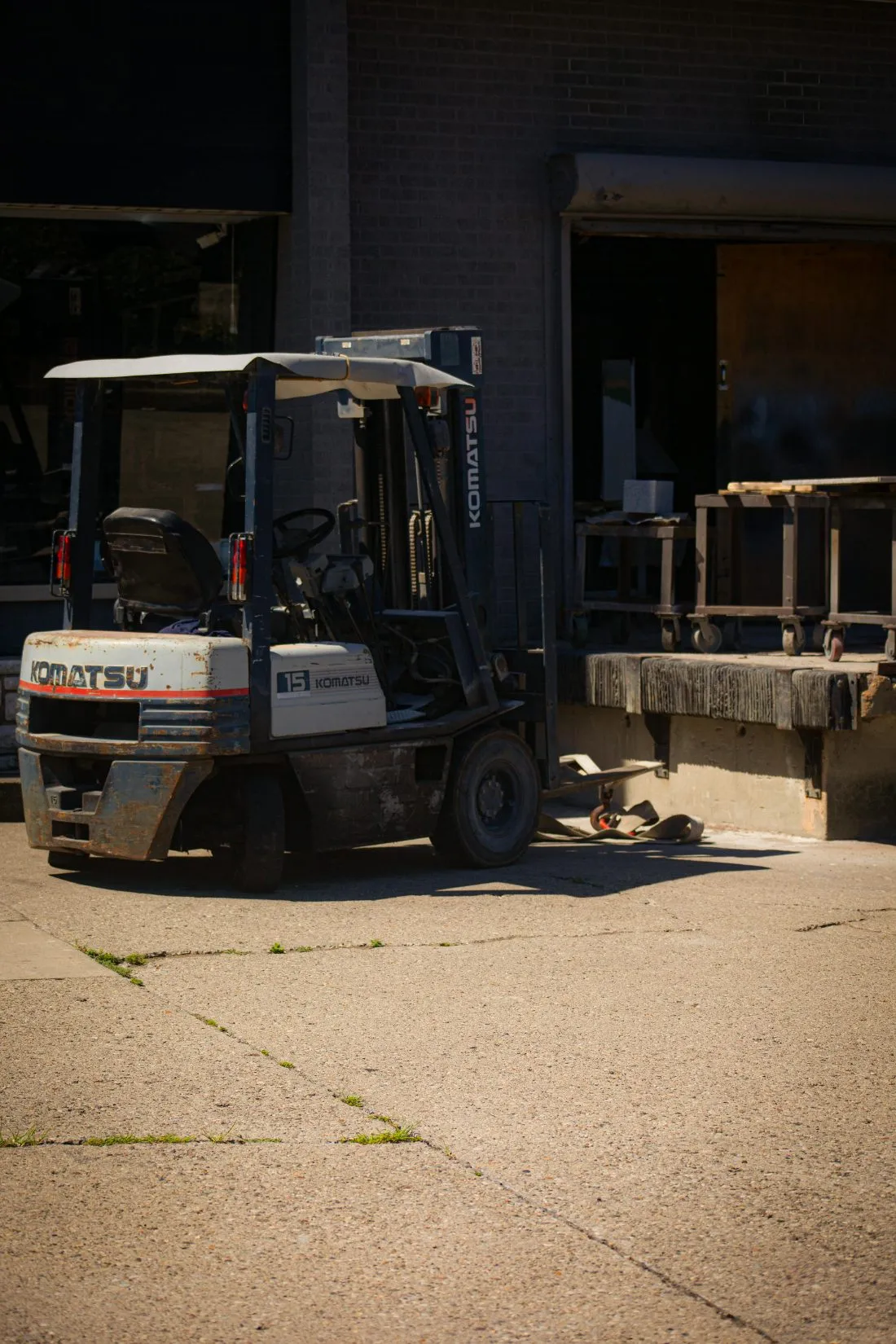
Forklift rental rates look arbitrary until you see the math behind them. Dealers don’t pull a daily number out of the air. They reverse-engineer it from what the machine cost them, what it costs to keep running, and the margin they need. Once you know that formula, you can sanity-check any quote and decide whether renting or owning actually saves you money. This guide gives you both: the rental pricing formula dealers use, and the ownership operating cost math you compare it against.
The Forklift Rental Pricing Formula
Every rental rate is built from four components:
Monthly rate = Depreciation + Maintenance reserve + Cost of capital + Margin
| Component | What it covers | Typical share of rate |
|---|---|---|
| Depreciation | Machine value lost over the rental period | 45 to 55% |
| Maintenance reserve | PM, wear parts, breakdown coverage | 20 to 30% |
| Cost of capital | Interest on the dealer’s investment | 8 to 15% |
| Margin | Dealer profit and overhead | 15 to 25% |
Worked Example
A dealer buys a 5,000 lb Class V LPG forklift for $35,000 and expects to rent it over a 48-month useful life before resale.
- Depreciation: ($35,000 − $8,000 residual) ÷ 48 months = $563/month
- Maintenance reserve: ~7% of price/year ÷ 12 = $204/month
- Cost of capital: $35,000 × 8% ÷ 12 = $233/month
- Subtotal cost: ~$1,000/month
- Add 25% margin: ≈ $1,250/month
That’s why a mid-size forklift rents for roughly $1,000 to $1,400/month: it tracks the purchase price closely.
The Quick Rule of Thumb
You don’t always need the full breakdown. Monthly rental rates cluster at 2.5% to 4% of the forklift’s purchase price:
- $20,000 machine → $500 to $800/month
- $35,000 machine → $900 to $1,400/month
- $60,000 machine → $1,500 to $2,400/month
Daily rates run about 5 to 8% of the monthly rate (a built-in premium for short terms). Weekly rates about 30 to 35% of monthly.
How to Calculate Forklift Ownership Operating Cost
To know if a rental is a good deal, you need your real cost to own. Owning is not just the purchase price. It’s the total cost of ownership (TCO) divided by the hours you actually use.
Annual ownership cost = Amortized price + Maintenance + Fuel/energy + Tires + Insurance + Storage
Step-by-Step
Take that same $35,000 forklift, run 1,200 hours/year, keep it 7 years:
| Cost line | Annual amount | How to estimate |
|---|---|---|
| Amortized purchase | $3,857 | ($35,000 − $8,000 resale) ÷ 7 yrs |
| Maintenance | $2,450 | 5 to 10% of purchase price/yr (used 7%) |
| Fuel/energy | $3,000 | ~$2.50/hr × 1,200 hrs (LPG) |
| Tires | $600 | Set every 2 to 3 yrs, amortized |
| Insurance | $500 | Liability + physical damage |
| Total/year | ~$10,400 | |
| Cost per hour | ~$8.70 | $10,400 ÷ 1,200 hrs |
Now compare: that $1,250/month rental = $15,000/year, or $12.50/hr at the same 1,200 hours. At this usage, owning is cheaper by ~$4,600/year.
The Usage Crossover
The answer flips entirely on how many hours you run:
- Under ~500 hrs/year (seasonal, project, backup): rent, ownership’s fixed costs spread over too few hours.
- 500 to 1,500 hrs/year: run the per-hour math both ways. The crossover sits in here, usually around 10 to 18 months of continuous need.
- Over ~1,500 hrs/year (daily single/multi-shift): own or lease, every rental month is pure overpay.
Resale value drives both the rental rate and your amortized cost. Get a free estimate in under 60 seconds.
Try the free value calculator →What’s Actually Included in the Rate (and What’s Not)
A quoted rate is rarely the price you pay. Check each line before signing:
- Usually included: the machine, breakdown service, and, on monthly terms, routine preventive maintenance.
- Usually extra: delivery and pickup ($150 to $500 round trip), damage/loss waiver (8 to 15% of the rate), fuel, the operator (who must hold current OSHA powered industrial truck certification), and consumables like tires and forks.
- Watch the hour cap: many rentals cap usage at 160 to 176 hours/month (one shift). Overage runs $8 to $20/hour. A two-shift operation can blow past the cap fast and erase the rental’s apparent savings.
Factors That Move the Rate Up or Down
- Class and capacity: Class II reach trucks and Class VII telehandlers rent at the top of the range. Class III walkies at the bottom.
- Term length: longer terms lower the monthly rate: a 6-month rental can be 20 to 30% cheaper per month than a 1-week rental.
- Market: urban hubs (LA, Chicago, Houston) run 10 to 20% above rural rates.
- Fuel type: electric rentals include the battery and charger but command a premium over comparable LPG.
- Attachments: clamps, positioners, and side-shifters add to the base rate.
Putting It Together
- Get your cost-per-hour to own using the TCO table above.
- Convert any rental quote to cost-per-hour at your real monthly usage.
- Compare, and factor in delivery, waivers, and overage caps before you commit.
For region-by-region numbers, see our rental cost page. For the full acquisition decision, read our buy vs. rent vs. lease guide or our broader forklift cost guide. Ready to get real quotes? Use the forklift selector to match your load and environment, then compare offers side by side.
Frequently Asked Questions
What is the formula for a forklift rental rate?
Dealers price a rental as: (machine acquisition cost ÷ depreciation months) + (monthly maintenance reserve) + (cost of capital) + target margin. As a quick rule of thumb, a monthly rental rate lands at roughly 2.5% to 4% of the forklift's purchase price. A $35,000 unit therefore rents for about $900 to $1,400 per month.
How do you calculate the true cost of owning a forklift?
Add the amortized purchase price (price ÷ expected service years), plus annual maintenance (5 to 10% of purchase price), fuel or electricity, tires, insurance, and operator-adjacent costs. Divide the total by the hours you actually run it to get a real cost-per-hour you can compare against any rental quote.
At what point is it cheaper to own than to rent a forklift?
The crossover is usually 10 to 18 months of continuous use. Below ~500 hours per year renting almost always wins. Above ~1,500 hours per year ownership almost always wins. Between those, run the cost-per-hour math both ways before deciding.
What is included in a forklift rental rate?
Most rates include the machine and basic breakdown service. Routine maintenance is often bundled on monthly terms but billed separately on daily rentals. Fuel, the operator, delivery/pickup, damage waiver, and consumables like tires are normally extra, always confirm before signing.
How much does delivery and pickup add to a forklift rental?
Round-trip transport typically adds $150 to $500 depending on distance and whether a tilt-bed or flatbed is required. On a one-week rental this can be 15 to 25% of the total, so it is worth negotiating or asking whether it is waived on longer terms.